Rustic Adirondack Lodges & Camps
Rustic is the right word for the Adirondacks — not a design aesthetic imported from elsewhere, but a regional building tradition that grew out of the Great Camps of the late 1800s. William West Durant built his first Great Camp in 1876, and the style — raw logs, exposed timber, stone fireplaces, dark wood interiors — became the template for decades of Adirondack lodging. What survives ranges from actual Great Camp properties to smaller rustic lodges that have maintained the aesthetic through renovation rather than invention. The Adirondacks are where rustic comes from.
18 Properties
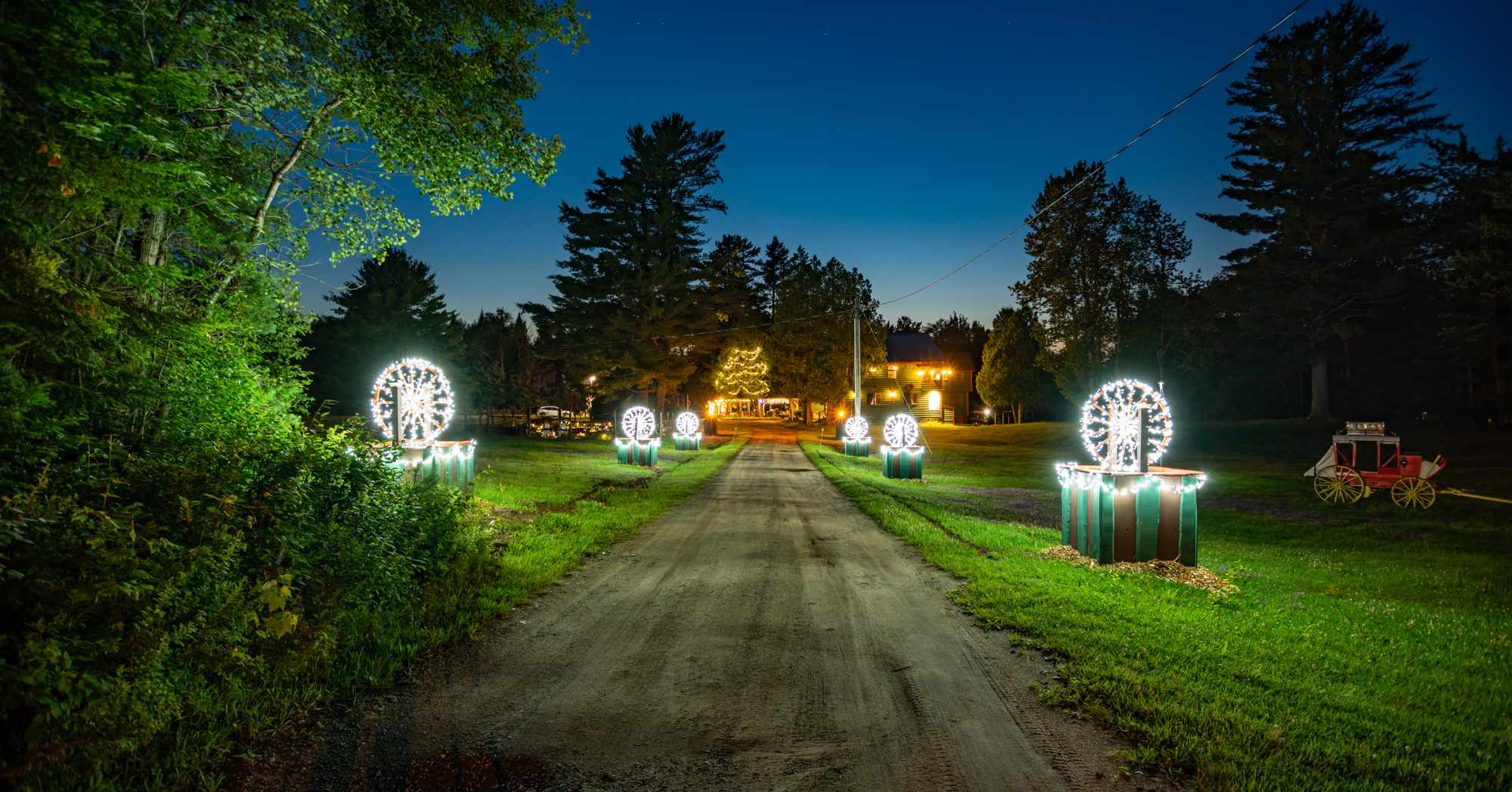
The Lodge at Lake Clear
Featured StayLake Clear · Lodge
Built in 1886 as an inn, trading post, and post office — and still owned and operated by the family of its original builder, Millard Otis. Cathy Hohmeyer runs what is the only Adirondack Great Camp still in continuous family ownership since construction, now known as Hohmeyer's Lake Clear Lodge. Twenty-five acres with an 1886 main lodge, three artisan chalets with wood-burning fireplaces, two specialty cabins with Jacuzzi tubs, and six suites. A 1920s speakeasy with a hidden wine and beer cellar is still fully operational. Adirondack Alps Restaurant, nature trails, and a sunset beach on Lake Clear.
Built 1886, still owned by the founding family — the only Adirondack Great Camp with this continuity. Hidden 1920s speakeasy on site. 25 acres on Lake Clear. Adirondack Alps Restaurant.

Elk Lake Lodge
Featured StayNorth Hudson · Lodge
Eight cottages and a renovated main lodge on 600-acre Elk Lake, at the center of a 12,000-acre privately held wilderness preserve in the High Peaks region. Protected by a New York State conservation easement. The public is not permitted inside the preserve — guests are the only visitors to the landscape. Forty miles of private hiking trails for exclusive guest use, plus boating and fishing on Elk Lake and 200-acre Clear Pond. All meals included in the nightly rate. Cottages sleep two to twelve, most with kitchens and fireplaces. The most genuinely exclusive wilderness property in the Adirondacks.
12,000 private acres. The public is not permitted inside. 40 miles of exclusive trails. Elk Lake and Clear Pond. All meals included. The Adirondacks without other people.
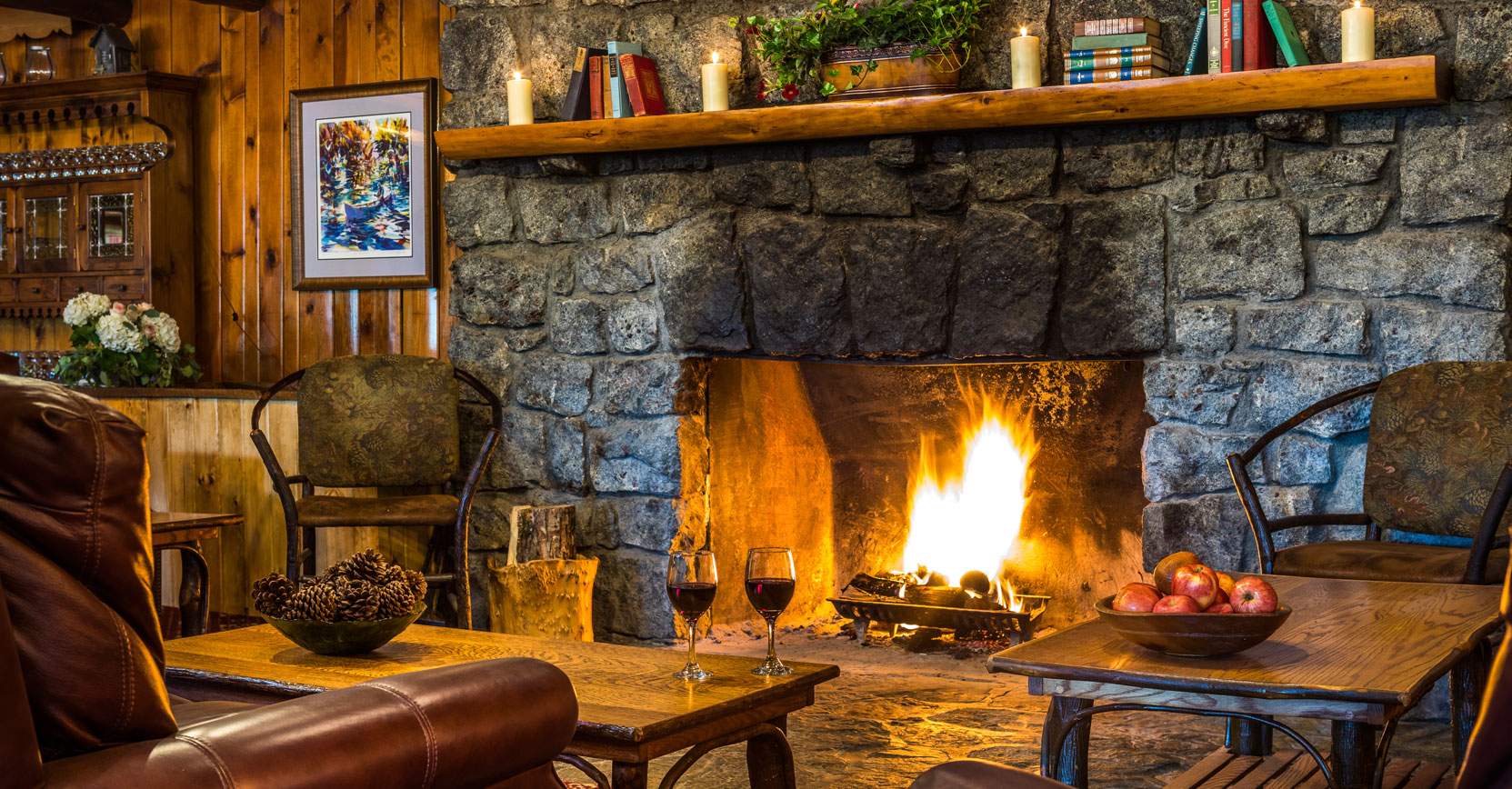
Garnet Hill Lodge
North River · Lodge
A mountain lodge on Thirteenth Lake above North River, built in 1937 by Frank Hooper — the garnet-mining entrepreneur who patented the vanning jig that mechanically separated garnet from rock. Hooper's mine operated on this land until the ore ran out around 1929; he eventually sold his separation technology to the Barton Mine on nearby Gore Mountain. Twenty-five rooms across three buildings: the original Log House, the Birches, and the Tea House with whirlpool baths. Fifty kilometers of groomed cross-country ski and snowshoe trails in winter; five miles of mountain-bike trails in summer. Adjacent to Gore Mountain.
The Hedges on Blue Mountain Lake
Blue Mountain Lake · Resort
A Great Camp on Blue Mountain Lake that started in 1880 as the private summer retreat of Civil War colonel Hiram Duryea, was bought at auction by the Collins family, and opened as a resort in 1921. Listed on the National Register of Historic Places in 2009 and one of the very few historic Adirondack Great Camps still operating as a functioning resort. Weathered cottages along the shoreline, a main dining lodge, and a lake that has changed very little in a century. The Adirondack Experience museum is at the southern end of Blue Mountain Lake.
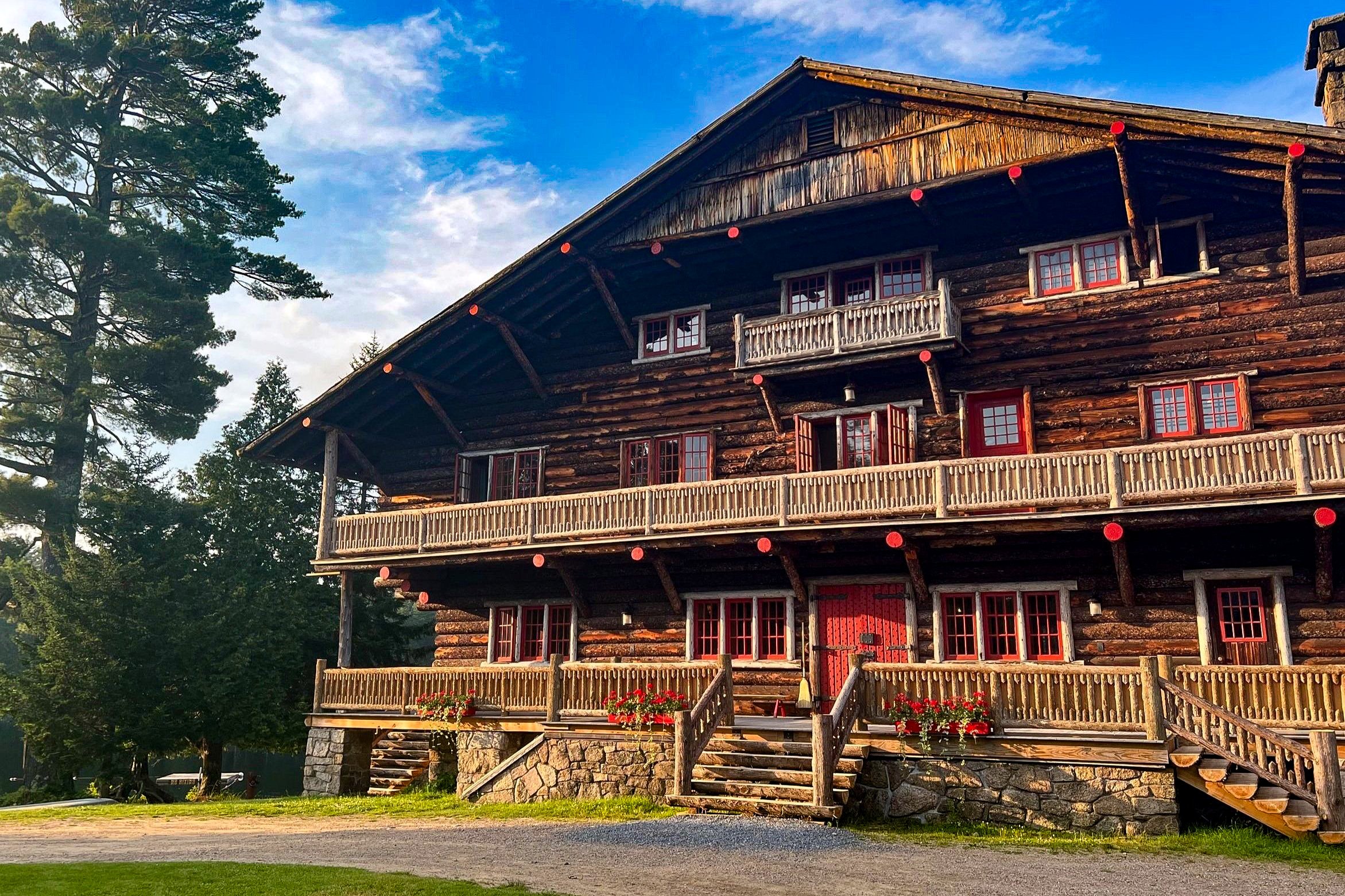
Great Camp Sagamore
Raquette Lake · Lodge
Built by William West Durant in 1897 and sold to Alfred Vanderbilt in 1901, Great Camp Sagamore is a National Historic Landmark on a private road off Route 28 in the central Adirondacks. All 27 original camp buildings remain standing — the main lodge, boathouse, recreation hall, staff quarters, and outbuildings — making it one of the most intact Gilded Age great camps in existence. Now operated by the Sagamore Institute for cultural programming: history tours, guided paddles, summer concert series, and multi-day overnight stays with family-style meals. Reservations required; this is not a drive-by.
Timberlock
Sabael · Resort
A family-run wilderness resort since 1899 on Indian Lake — no electricity in the cabins, just canoes and campfires.
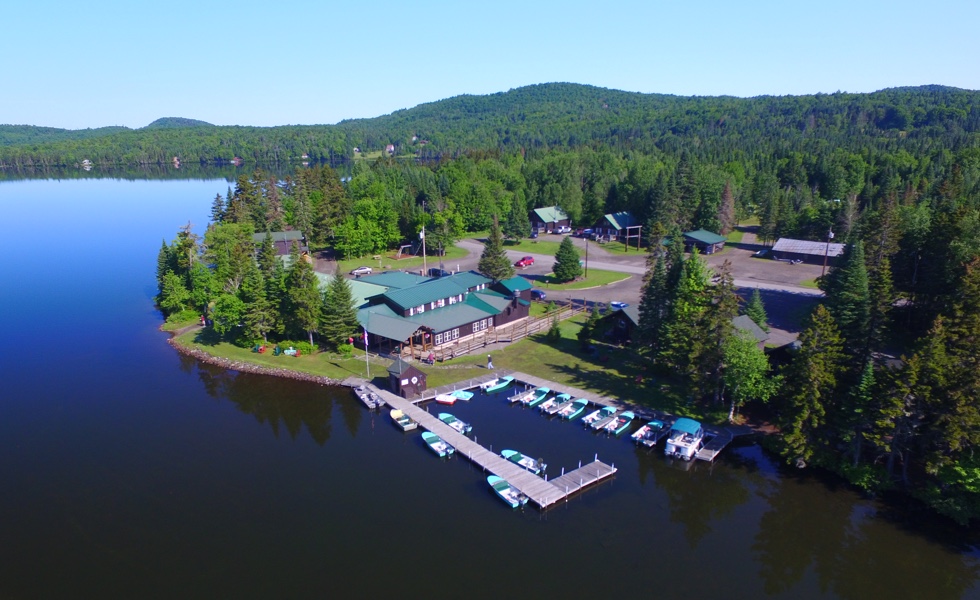
Tall Timber Lodge
Long Lake · Lodge
Housekeeping cabins on Long Lake — a 14-mile stretch of calm water running through the central Adirondacks, quieter and less trafficked than the southern lakes. Private sandy beach, canoe and kayak rentals, and campfire pits on the waterfront. Long Lake village is a short walk: general store, town dock, and not much else, which is the point. You bring the food, cook on your own schedule, and spend the rest of it on the water.
Adirondack Hotel
Long Lake · Hotel
The only hotel from the 19th-century Adirondack era still operating in the Park. The original Kellog's Lake House on this site burned in 1898; the current four-story building was rebuilt by 1899 and expanded with a formal dining room and additional rooms in 1914. Twenty renovated rooms across the upper floors; restaurant, taproom, and sitting room below. Located across from the Long Lake town beach, with Helm's seaplane rides at the dock. Carol Young has owned and operated the property since 1990.
Hemlock Hall
Blue Mountain Lake · Lodge
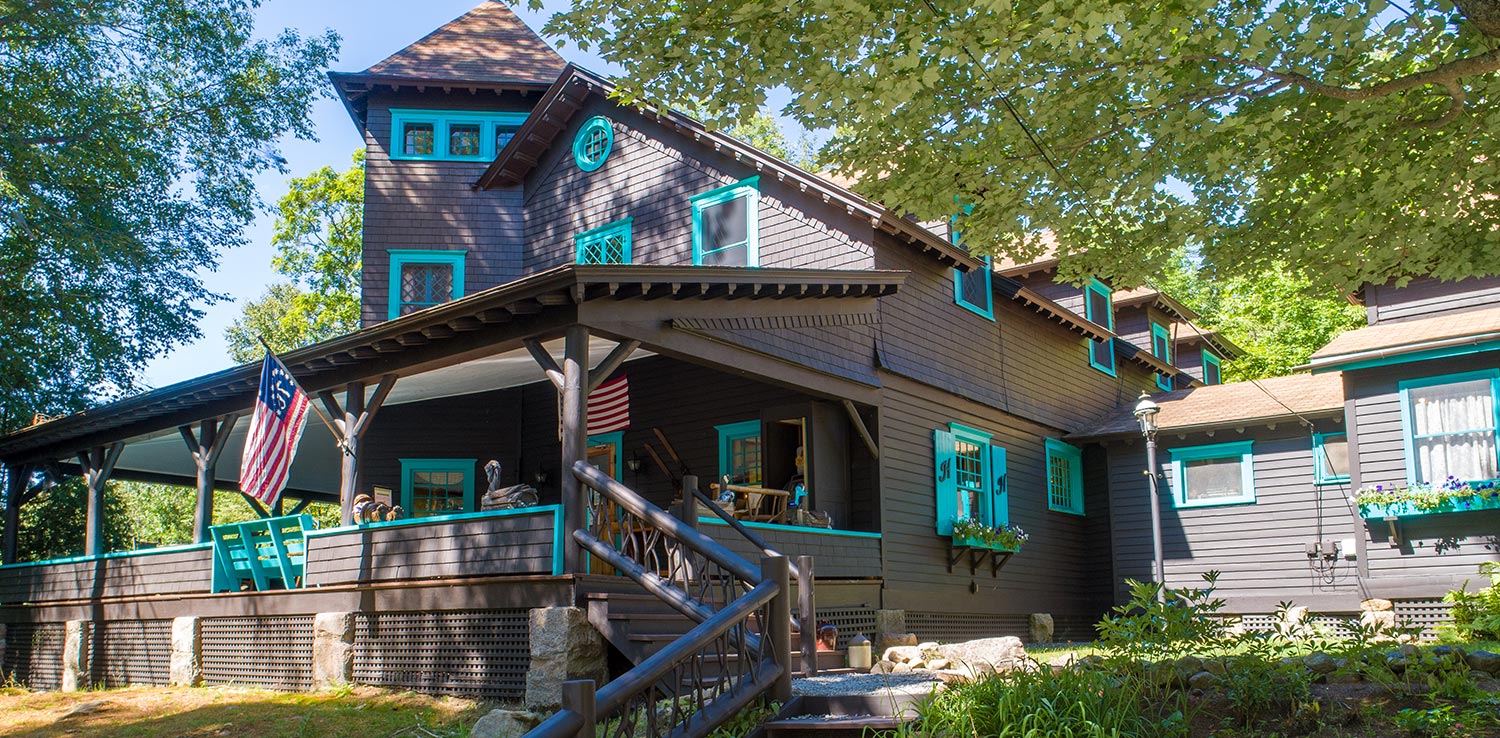
A historic lakeside resort on Blue Mountain Lake dating to 1898, when it was built as a private hunting camp named Nawadaha. Paul Provost, who vacationed here as a child, bought it in 1986 and has maintained the original character. Eight rooms in the main lodge, four motel-style units, and nine cottages on 500 feet of waterfront. Modified American Plan: a hearty breakfast and a family-style dinner in the main dining room are both included in the rate. No televisions, phones, or radios in any room. Rowboats, kayaks, canoes, and paddleboards at the dock.
Trout House Village Resort
Hague · Resort
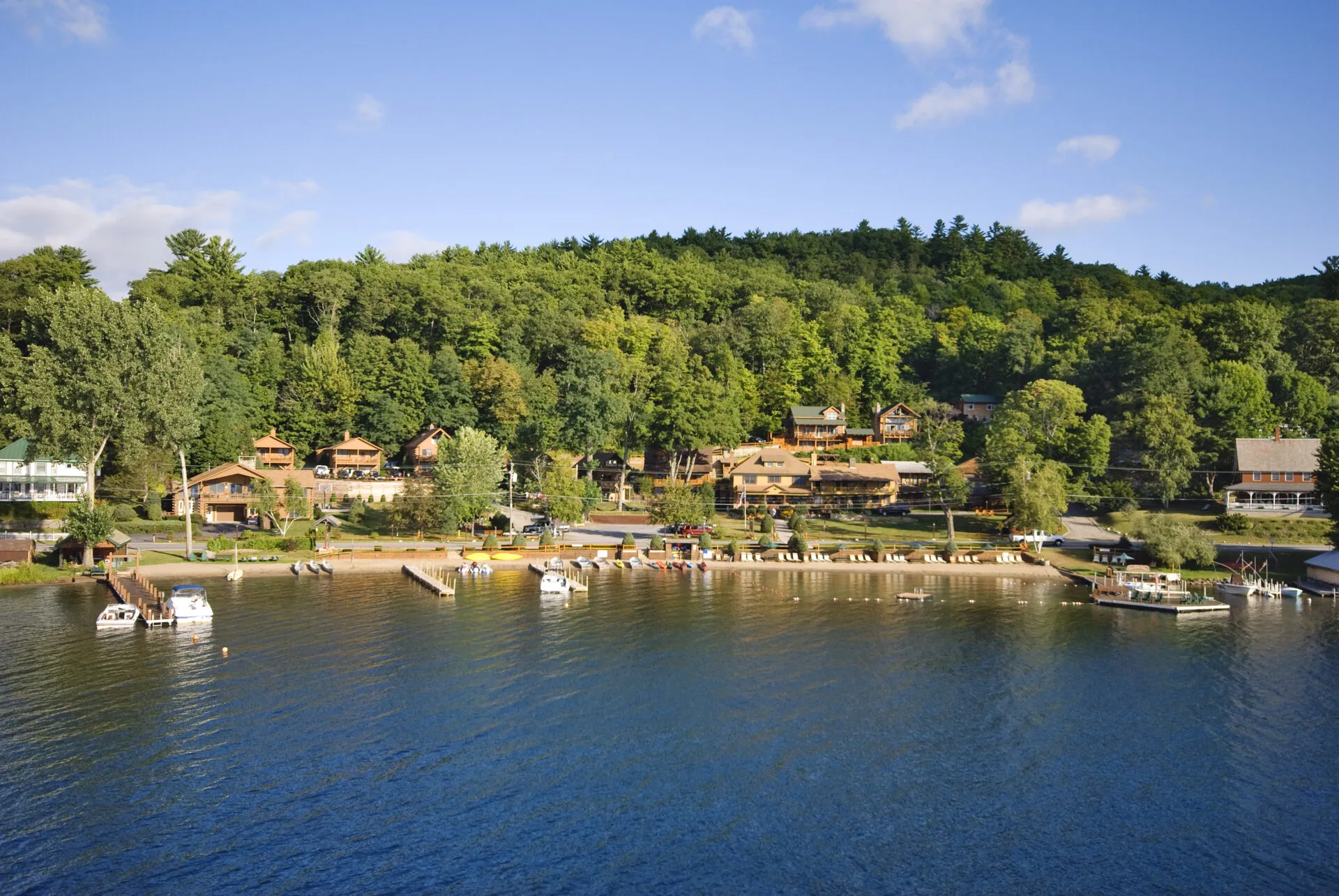
A resort on the quiet northern shore of Lake George in the village of Hague — log cabins, chalets, a nine-bedroom Country Inn, and motel rooms, with a 400-foot natural sandy beach and a full fleet of kayaks, canoes, stand-up paddleboards, sailboats, rowboats, and paddleboats for guest use. Hague sits at the narrow northern end of the lake, well away from the commercial strip at Lake George village to the south. Cabin chalets have fireplaces and jet tubs. Year-round property.
Covewood Lodge
Big Moose · Lodge
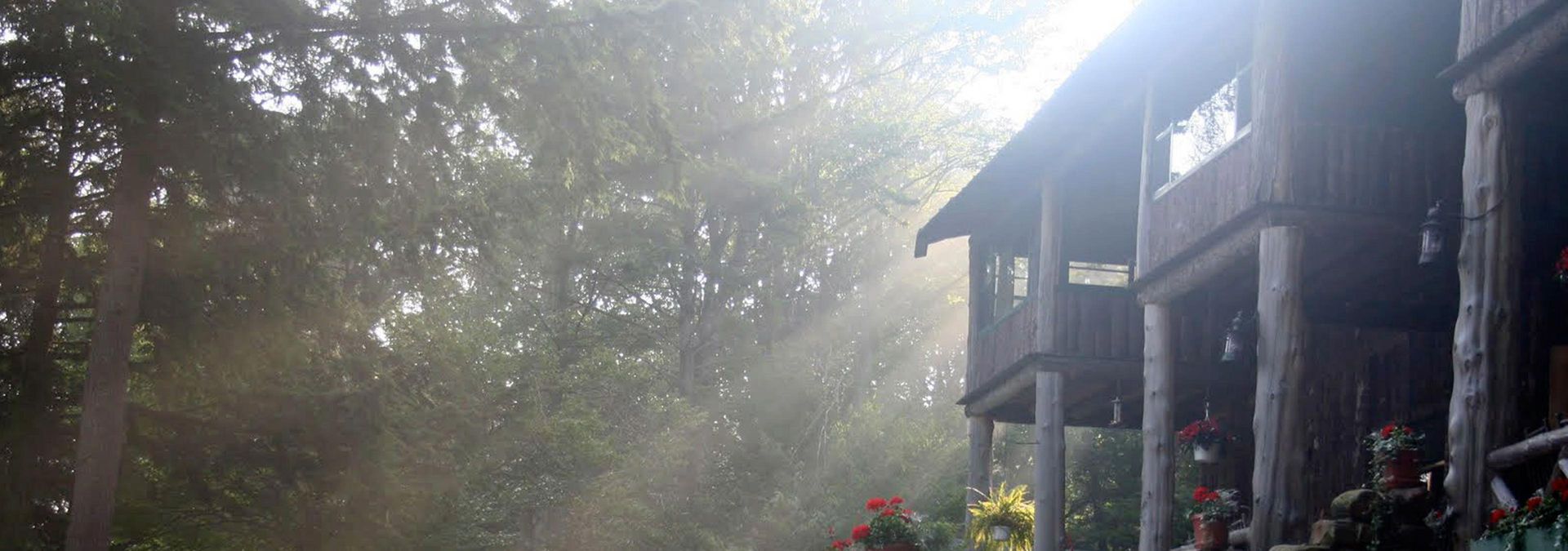
A Great Camp-style complex on Big Moose Lake built by master builder Earl Covey in 1924 and listed on the National Register of Historic Places since 2004. Owned and operated by the Bowes family since 1951. The main lodge — a two-story log structure with a two-story verandah supported by massive tree trunks — anchors nineteen historic cottages on the shoreline. No televisions or WiFi in the cabins. Seasonal operation from May through October.
Curry's Cottages
Saranac Lake · Cottages
Simple housekeeping cottages on Lower Saranac Lake — screen porches, rowboats, and not much else.
Lapland Lake Nordic Center
Benson · Lodge
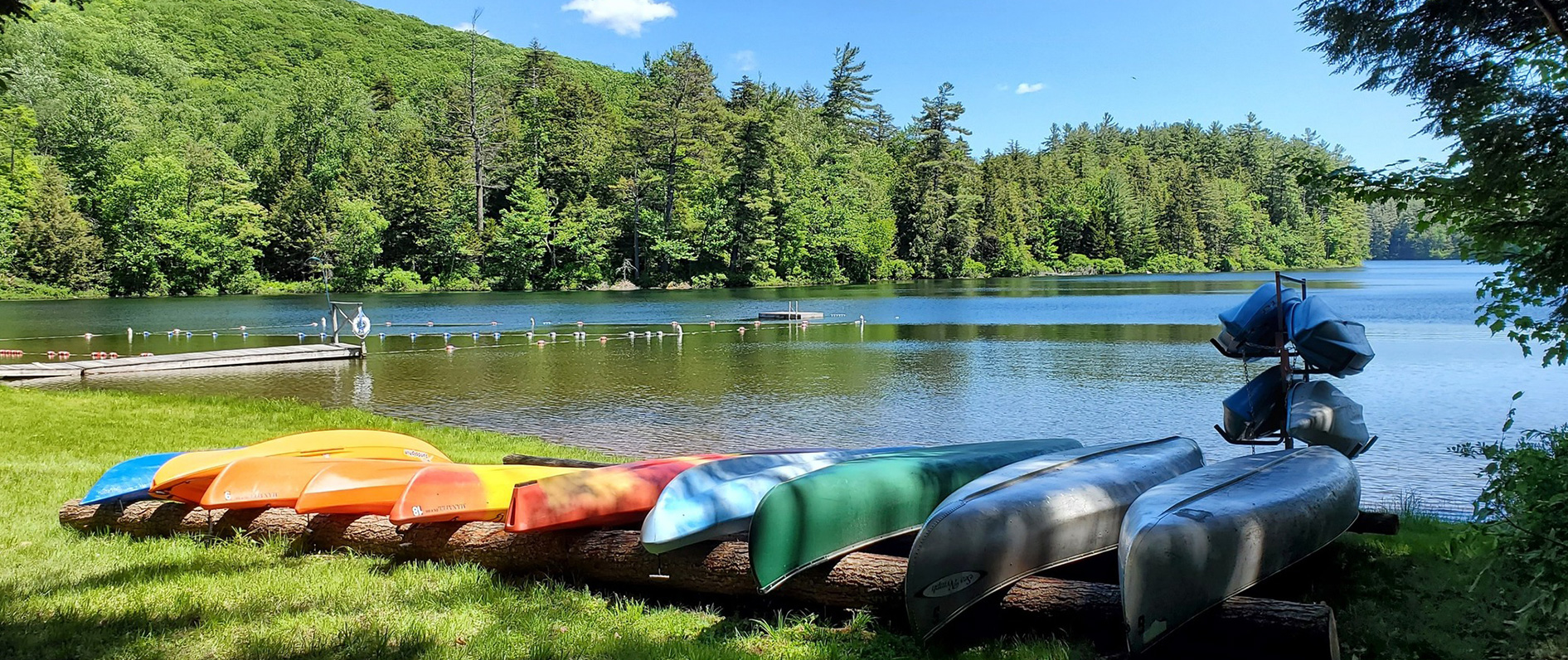
A Nordic ski and outdoor resort in Northville, founded by Finnish-born skier Olavi Hirvonen in 1979. Ten housekeeping tupas (Finnish cottages) sleeping up to four bedrooms with fully equipped kitchens and screened porches; a complimentary Finnish wood-burning sauna is available to overnight guests year-round. In winter: 50 kilometers of groomed ski and snowshoe trails. In summer and fall: a 70-acre motor-free lake with swimming, kayaking, canoeing, and fishing, plus 30 miles of hiking and mountain-bike trails.
Ridin-Hy Ranch Resort
Warrensburg · Resort
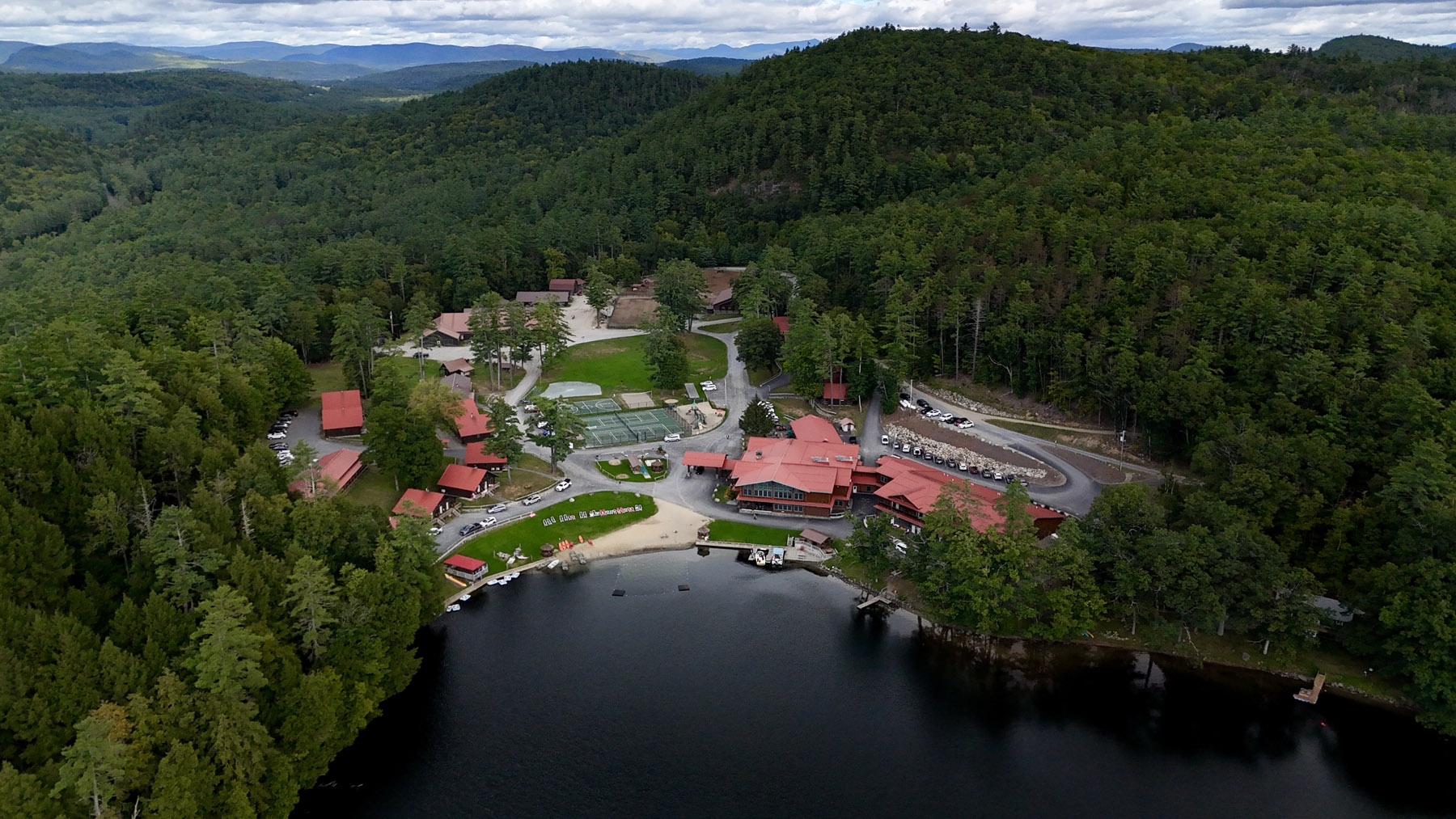
A family-owned all-inclusive resort in Warrensburg, operating since 1940 on 700 acres at the southern edge of the Adirondack Park. Sherman Lake for swimming and water-skiing; 700 acres of trail riding on well-trained horses; rodeo, ice-skating, sleigh rides, snowmobiling, and downhill skiing in winter. All meals included; alcohol is additional. Accommodations range from motel rooms to cabins and chalets. Twenty-five minutes from Lake George village. The only dude ranch in the Adirondacks.
Trail's End Inn
Keene Valley · Inn
A family-run inn in the heart of Keene Valley with twelve rooms and three cottages — some rooms have wood-burning fireplaces and jetted tubs, all include a full home-cooked breakfast with French toast, quiche, and baked goods from scratch. The High Peaks trailheads are minutes away, making this a practical base for peak-baggers who want a real bed rather than a campsite. No on-site restaurant; good options are close in the valley. Fifteen minutes to the Whiteface Olympic venues; twenty to Lake Placid.
Black Bear Mountain Lodge
Inlet · Lodge
Five Adirondack lodges on Fourth Lake in the Fulton Chain, each sleeping 8 to 12 guests with 2 to 5 bedrooms, full kitchens, fireplaces, and kayaks, canoes, and paddleboards at a sandy beach. The property sits directly on Snowmobile Trail 5, which connects the entire Fulton Chain of Lakes system in winter. Inlet village is a short walk; Old Forge is 10 miles. The right option for groups who want a private lodge with full amenities.

The Waldheim
Saranac Lake · Cottages
Seventeen housekeeping cottages on the shore of Big Moose Lake in the central Adirondacks, continuously operated since 1904 and owned by the Bowes family since 1951. Cottages range from one to five bedrooms, each with a living room, wood-burning fireplace or stove, and a porch overlooking the lake. No phones, televisions, clocks, or radios in any cottage. A wood boy starts a fire in each cottage early every morning and keeps the porch stocked with wood. Seasonal: May through October.

Dartbrook Lodge
Keene · Lodge
Seven Great Camp-inspired cabins in Keene, ranging from studios to two-bedroom retreats, most with kitchenettes and porches above Dart Brook. The design takes the Gilded Age great camp tradition as its reference — timbered, intimate, handcrafted — at an approachable scale. The AuSable River runs through the Keene valley below with waterfalls and natural swimming holes; the High Peaks trailheads are minutes up Route 73.
View more Rustic properties
Browse Now →What Makes It
- •The Great Camp tradition is architecturally specific: log and timber construction, bark-covered exteriors, multi-building compounds set on private lakefront land. Several Great Camps are now accessible as lodging, including White Pine Camp — former summer White House of Calvin Coolidge — and Sagamore.
- •The difference between authentic Adirondack rustic and generic lodge design is legible once you know what to look for: stone fireplaces with specific masonry, hand-crafted furniture, original hardware, twig-and-bark decorative elements. The best properties have these in abundance.
- •Lake access is fundamental to the rustic camp tradition — the original Great Camps were organized around private lakes, and the rustic properties with their own or shared lake access maintain a connection to the original experience that landlocked properties miss.
Similar Collections
Frequently Asked